How does a removal from the UK to France work?
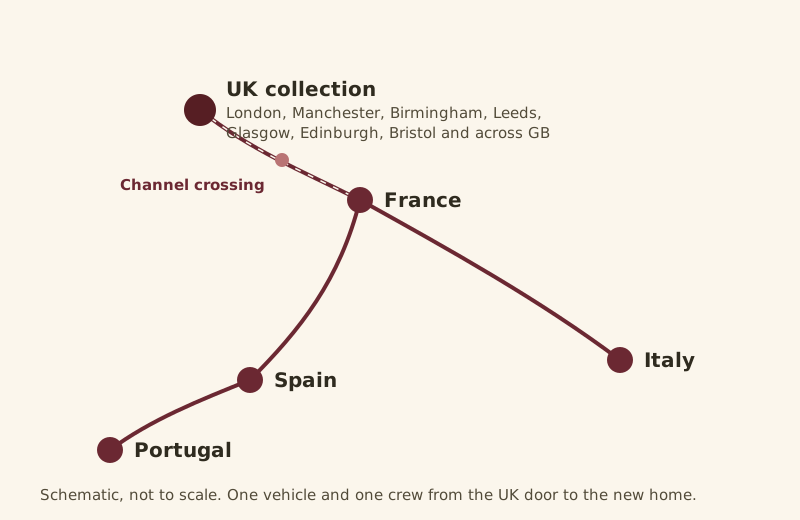
France is the nearest of our four destinations, and the one where the road does most of the explaining. The vehicle and crew that load at your UK address cross the Channel with your goods, by the Folkestone shuttle or a Dover ferry depending on the load, and carry on to the delivery address. There is no handover to a destination agent and no warehouse in the middle unless you ask for one.
Whether you are planning removals from London to France, a move from Manchester to a farmhouse in the Dordogne or a flat move from Glasgow to Lyon, the shape of the job is the same: one crew from door to door and one written quote, whether your belongings travel on their own vehicle or as part of a shared load. What changes from move to move is the French end. A narrow lane in rural Brittany, a walk-up apartment in Paris and a new-build villa outside Montpellier ask very different things of a crew, and they are the reason we survey before we quote rather than pricing from a postcode.
What are the stages of the move?
Every move to France runs through the same seven stages. None of them carries a fixed duration here, because the honest answer depends on the size of the load, the route and how quickly your paperwork closes. Your written quote sets out an estimated window for your own move.
- Survey. A video or in-home survey of what is going, what is staying and what access looks like at both ends. We ask about the French address in as much detail as you can give: street width, parking, stairs, lift, gates.
- Written quote. A single written quote covering packing, loading, the crossing, customs documentation and delivery, with every assumption stated so you can check it.
- Packing. Full packing, fragile-only packing or none at all; see packing services. Each carton is listed against the inventory that French customs will rely on.
- Loading. The crew loads in the order the French end needs, so beds and kitchen essentials come off first.
- Crossing. The vehicle crosses the Channel with the crew. Your goods stay on the same vehicle from your UK door to your French one.
- Customs paperwork. The UK export and French import formalities are completed, with transfer-of-residence relief claimed where you qualify.
- Delivery. Unloading, placement room by room, reassembly of anything we dismantled, and removal of packing materials if you want them gone.
What should you have ready before collection?
The crew does not need your whole life in paperwork, but the customs declaration does need a handful of documents to exist before the vehicle leaves. This is the working list for a main-residence move to France.
| Document | Who issues it | Why the crew needs it |
|---|---|---|
| Passport | HM Passport Office | Identifies you as the owner of the goods on the customs declaration. |
| French long-stay visa or residence card | French consulate (visa) or your préfecture (card) | Shows the move is a genuine change of residence, which the relief claim rests on. |
| Proof of your French address | Your notaire, landlord or utility provider | Ties the inventory to a real delivery address in France. |
| Proof of your previous UK residence | Council, utility or HMRC records in your name | Shows the goods are leaving a home you lived in rather than being newly bought. |
| Itemised, valued inventory, dated and signed | You, prepared with the crew at survey and packing | French customs expects a dated list of what is coming in. We build it with you. |
| French customs change-of-residence declaration | Prepared by us, signed by you | The formal claim for relief from import VAT and duty on your household goods. |
Requirements change. Confirm the current list with the official sources further down this page before you book.
Which French residence documents apply to UK nationals?
Since the UK left the EU, British nationals are treated as third-country nationals in France. If you were already living in France before the end of the transition period, your right to stay is protected under the Withdrawal Agreement and evidenced by the residence card issued to Withdrawal Agreement beneficiaries. If you are moving now, you will normally need a long-stay visa from the French consulate before you travel, which you then validate or convert into a residence permit (titre de séjour) once you are in France.
The visa category depends on why you are going: retirement, work, study or joining family. We cannot advise on which one fits you. What matters for the removal is that the residence document exists, or is in progress, because the customs relief on your household goods relies on it. Check the current position in the GOV.UK Living in France guide before you commit to a collection date.
How does customs work for household goods going to France?
Household goods crossing from the UK into France are now an export from the UK and an import into the EU. Without relief, they would attract French import VAT and possibly duty. Transfer-of-residence relief, set out in Council Regulation (EC) No 1186/2009, removes that charge for people genuinely moving their normal residence into the EU.
The conditions, in outline: you must have had your normal residence outside the EU for a minimum period before the move; the goods must be personal property you have owned and used for a period before the move; and they must be intended for the same use at your new home. There are restrictions on selling or lending relieved goods soon after import, and some categories, such as motor vehicles, alcohol and tobacco, are handled separately. French customs (the douane) applies the regulation through its own change-of-residence declaration and supporting inventory.
The fuller explanation is on our customs and paperwork page. The short version is that we prepare the paperwork with you, you sign it, and the declaration travels with the goods.
What makes the French end of the move different?
The questions we ask at survey about the French address are not idle. These are the things that most often change how a job is planned:
- Parking in towns and cities. Many French towns expect a removal vehicle parked on the public road to have permission. Where that applies, it is usually requested from the mairie, and we will tell you if your street needs it.
- Apartment buildings. Flats in Paris and Lyon often have small lifts or none at all, and some buildings expect notice to the building manager (the syndic) before a move. Bulky items may need to come up by external lift, which we plan at survey.
- Rural properties. Farmhouses in Normandy, the Dordogne or the Limousin can sit at the end of lanes too narrow for a full-size vehicle. A smaller shuttle vehicle for the final stretch is common, and it goes into the written quote rather than being added on the doorstep.
- Second homes. If you are furnishing a holiday house rather than moving your main residence, transfer-of-residence relief does not apply in the same way. Tell us at survey so the paperwork is right from the start.
- Gaps between leaving and arriving. If the French keys are not ready when the UK house empties, the load can wait in storage until they are.
Where in the UK do moves to France start?
Anywhere in Great Britain. Many of our UK to France removals start in and around London, but we collect just as readily from Manchester, Birmingham, Leeds, Bristol, Glasgow and Edinburgh, and from the towns between them. A move from Edinburgh to France simply has a longer UK leg before the Channel; the crossing, the paperwork and the French delivery are identical. Removals from London to France and removals from Leeds to France are quoted on the same basis: what is going, where it is coming from, and what access looks like at each end.
If France is one of several places you are weighing up, the Spain, Italy and Portugal guides cover the same ground for those routes, and the international removals overview compares all four.
Own vehicle or shared load to France?
For France, a shared load works well for flats in Paris, Lyon or Bordeaux, while rural farmhouses with narrow lanes are usually better served by a sole-use vehicle that can plan its own shuttle at the French end.
Both options can be priced on the written quote: a sole-use vehicle runs to your dates, a shared load travels with other moves on the route. In either case one crew loads and unloads, with no hand-off.
The European removals guide compares the options side by side, including storing first and delivering later. If your belongings will be stored before they leave the UK, mention it at the survey: transfer-of-residence relief only covers goods imported within a limited period after you move, so a long stay in storage can affect whether they qualify.
Where can you check the official rules?
For France, the GOV.UK guide covers the long-stay visa and titre de séjour, and links to the French consulate for current visa requirements. French customs (la douane) publishes the change-of-residence formalities for household goods.
This page summarises the rules rather than replacing them; check the sources below before you book.